The Glory of God Is the Living Man
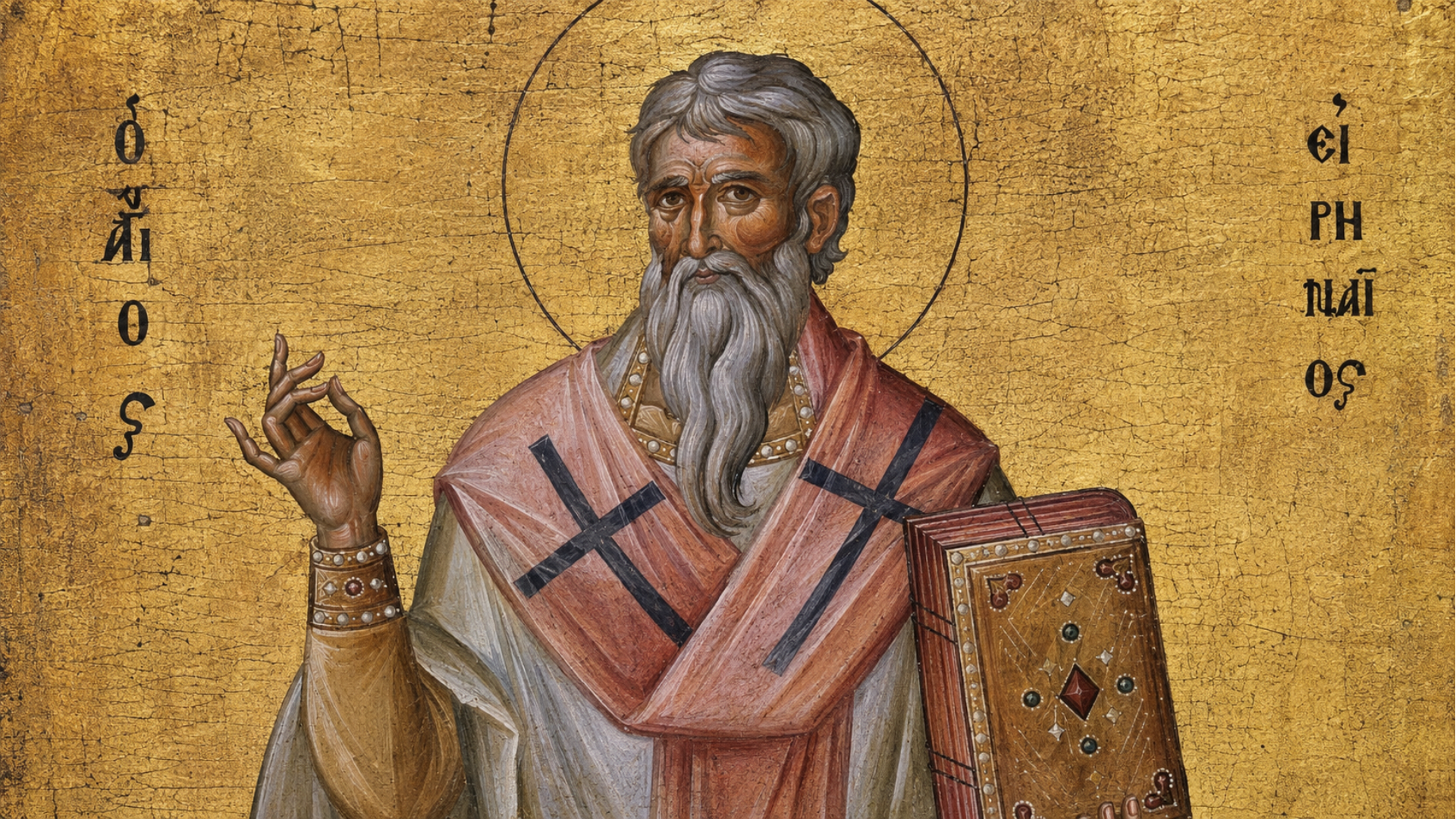
Around the year 185, Irenaeus, the bishop of Lyon, wrote: “For the glory of God is the living man, and the life of man is the vision of God.”[1]
It is a sentence worth sitting with. The glory of God is displayed in a living man. That glory is the radiant, weighty, self-revealing splendor of the living God. And the life we were made for, the life that is truly life, consists in seeing God. Everything the Christian faith teaches about salvation, about Christ, about the work of the Holy Spirit, is compressed into those two clauses.
But who is “the living man”? And what does it mean to see God?
The Word Made Visible
Irenaeus wrote these words in Against Heresies, his work defending the faith against the Gnostic movements that were sweeping through the early church. The Gnostics despised the body, denied the goodness of creation, and taught that salvation meant escaping the material world into a purely spiritual realm. Against all of this, Irenaeus proclaimed that the God who made us also came to us in the flesh, in a body that could be touched and seen.
Irenaeus places the famous line at the end of a meditation on how God makes himself known. The Word, he says, “showed God to man and man to God,” making the Father visible “so that man might not be totally deprived of God and perish.” Then comes the sentence: “For the glory of God is the living man, and the life of man is the vision of God.”[2]
Notice what is happening here. God makes himself visible in Jesus Christ so that we would not perish, cut off from God. The Son reveals the Father. God takes the initiative to give us life by showing us his face in Jesus Christ. John put it this way: “From his fullness we have all received, grace upon grace. . . No one has ever seen God; God the only Son, who isat the Father’s side, he has made him known” (John 1:16, 18). The Word who reveals the Father is the Word from whom we receive.
The Living Man Is Christ
When we read Irenaeus carefully, it becomes clear that “the living man” is not a general statement about human potential. It is a claim about Christ.
In Irenaeus’s theology, there is a crucial distinction between being merely animated and being truly alive. Adam received the breath of life and became, in Paul’s words, “a living soul” (1 Corinthians 15:45). But the breath of life and the life-creating Spirit are not the same thing. Adam was animated: given a creaturely life that was real but temporary, a life that could be lost and was lost. Christ, the last Adam, is the one who is truly alive, vivified by the Holy Spirit, and who gives that life to others.
As the patristics scholar John Behr has shown, Irenaeus understood the whole sweep of God’s work as an arc that moves from Adam to Christ, from the breath to the Spirit, from a preliminary sketch to a completed masterpiece. Adam was made “in the image” of God (Genesis 1:26–27), but Christ is “the image” (Colossians 1:15). Adam is the type; Christ is the reality the type was always pointing toward. As Irenaeus writes elsewhere, “in times long past it was said the human being was made in the image of God, but it was not shown to be so; for the Word was as yet invisible, after whose image the human was created.”[3] Only when the Word became flesh did the image come into full view. Christ is, as Behr puts it, “the first human being, strictly speaking, of whom Adam was but a foreshadowing.”[4]
When Irenaeus says the glory of God is “the living man,” the word “living” matters. It carries the weight of his whole argument. It refers to the one in whom God’s Hands, the Son and the Spirit, completed their work. In Christ, the ancient substance of Adam’s humanity is taken up and vivified by the Holy Spirit, rendering the human being, as Irenaeus puts it, “living and perfect, bearing the perfect Father.” Christ alone first shows us the life of God in human form. Paul says the same thing: Christ is “the image of the invisible God” (Colossians 1:15). John tells us that “No one has ever seen God; the only-begotten God, who is in the Father’s bosom, has revealed him” (John 1:18). And Paul names where that glory is seen: God “has in our hearts to give the light of the knowledge of the glory of God in the face of Jesus Christ” (2 Corinthians 4:6). The glory of God shines in the face of a particular living man: Jesus Christ, alive, risen, and now making us alive in union with himself.
From the Breath to the Spirit
But the story does not end with Christ alone. The whole point of God’s saving work is that what is true of Christ might become true of us. The arc that moves from Adam to Christ is the same arc along which we are being carried.
Irenaeus saw this with remarkable clarity. The creatures made from earth and animated with a breath of life cannot be created already living the life of God: that life has to be received, learned, entered into. And the way we enter into it is through dying and rising with Christ. “Do you not know,” Paul writes, “that all of us who have been baptized into Christ Jesus were baptized into his death?” (Romans 6:3). For Irenaeus, baptism is the regeneration of the human being, the passage from the old life of the breath to the new life of the Spirit.
This is what the Spirit does for us even now. The Spirit unites us to Christ, and in that union we receive everything. We do not ascend to God by our own effort. God descends to us. The righteousness by which we are saved does not belong to us; it belongs to Christ and is given to us as a gift. We are, as John Calvin writes, “naked of all virtue in order to be clothed by God … empty of all good, to be filled by him … slaves of sin to be freed by him.”[5] And we are clothed, filled, and freed, not by our own striving, but by being joined to Christ through his Spirit.
Paul puts it as directly as possible: “You have died, and your life is hidden with Christ in God. When Christ who is your life appears, then you also will appear with him in glory” (Colossians 3:3–4). Our life is not something we manufacture. It is something we receive. Christ gives it to us by his Spirit.
Where This Is Heading
And where is it all heading? To seeing him. “We shall be like him,” John writes, “for we shall see him as he is” (1 John 3:2). The life of man is the vision of God, not in the Platonic sense of the soul escaping the body to merge with an impersonal divine essence, but in the deeply Christian sense of resurrected, embodied people beholding their risen Lord.
Irenaeus was emphatic about this. Against the Gnostics who despised the body and longed to be rid of it, he insisted that God’s redemption includes our flesh. Christ was raised bodily. We will be raised bodily. And in that resurrection, we will see God and live. What God began in creating Adam from the dust, that long, patient work of fashioning human beings in his image, will be brought to completion when we behold the glory of God in the face of Christ and are made fully, finally, alive.
This is what the East has called theosis and the Reformation calls glorification. It is real participation in the life of God. But it is participation by grace, through the Spirit, who unites us to the risen and ascended Christ. We are not absorbed into God’s essence. We do not cease to be creatures. We are made partakers of his glory and immortality, as Calvin said, “as far as our capacities will allow.”[6]
Until then, we live by faith. We look not to the things that are seen but to the things that are unseen, “for the things that are seen are transient, but the things that are unseen are eternal” (2 Corinthians 4:18). We set our minds on things above, where Christ is, seated at the right hand of God. And we trust that the same Spirit who raised Jesus from the dead is at work in us, carrying us along that great arc from breath to Spirit, from animation to the fullness of life.
The glory of God is not our self-improvement. It is not our performance. It is a living man: Jesus Christ, the Word made flesh, the completed work of God’s own Hands, who reveals the Father and gives life to all who see him. And the life we are looking for is not found by looking within. We find it by looking to him, and by his Spirit he makes us alive.
“For the glory of God is the living man, and the life of man is the vision of God.”
[1] Irenaeus, Against Heresies 4.20.7, as translated in Robert M. Grant, Irenaeus of Lyons (London: Routledge, 1997).
[2] Irenaeus, Against Heresies 4.20.7, as translated in Robert M. Grant, Irenaeus of Lyons (London: Routledge, 1997).
[3] Irenaeus, Against Heresies 5.16.2, quoted in John Behr, “Irenaeus of Lyons,” in Christian Theologies of Salvation, ed. Justin S. Holcomb (New York: NYU Press, 2017).
[4] John Behr, “Irenaeus of Lyons,” in Christian Theologies of Salvation, ed. Justin S. Holcomb (New York: NYU Press, 2017).
[5] John Calvin, Institutes of the Christian Religion, ed. John T. McNeill, trans. Ford Lewis Battles (Philadelphia: Westminster, 1960), “Prefatory Address to King Francis I of France.”
[6] Calvin, Commentary on the Catholic Epistles, on 2 Peter 1:4.